
Marketing Automation in 2027: Why Better Systems Are Changing the Way Marketers Work
Introduction
Digital marketing is changing rapidly as technology continues to improve. In 2027, businesses are using automation and artificial intelligence (AI) to manage their marketing activities more efficiently. Instead of spending hours on repetitive tasks, marketers can use smart tools to save time, understand customers, and improve campaign performance.
Marketing automation is becoming an important part of digital marketing because it helps businesses connect with their audiences and create better customer experiences.
What Is Marketing Automation?
Marketing automation is the use of software and digital tools to perform repetitive marketing tasks automatically. These tasks include sending emails, scheduling social media posts, managing customer enquiries, and tracking campaign results.
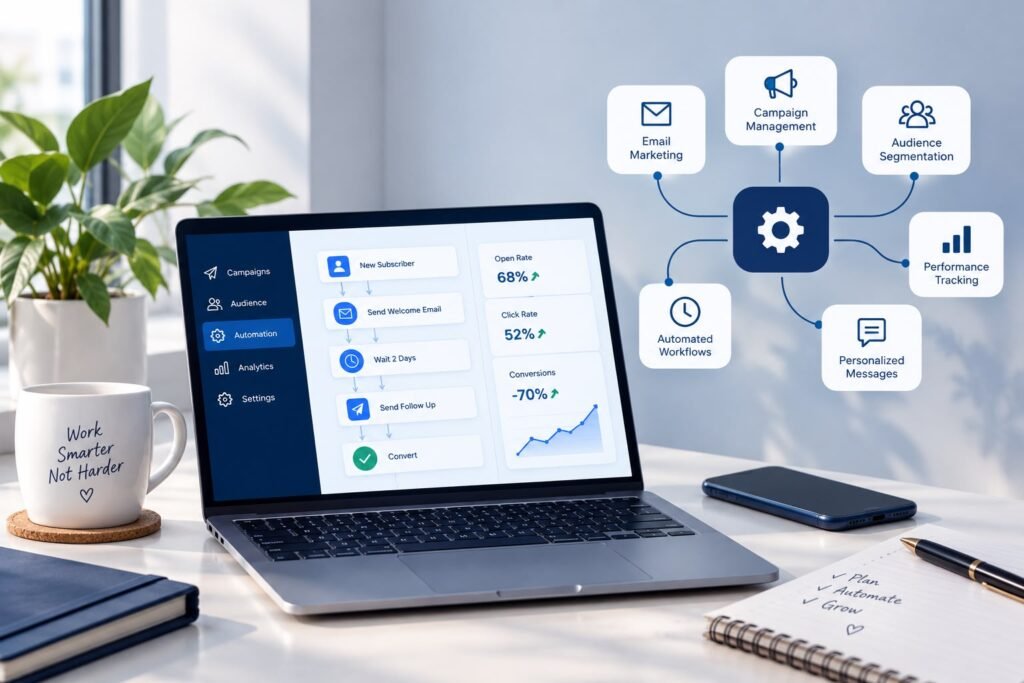
For example, when someone subscribes to a newsletter, an automated system can send a welcome email without requiring the marketer to send it manually.
Marketing automation helps businesses organise their work, maintain consistent communication, and focus on important marketing strategies.
Why Marketing Automation Matters in 2027
In 2027, customers expect quick responses, relevant content, and personalised experiences from brands. Managing all these activities manually can be challenging, especially for businesses with large audiences.
Marketing automation makes these processes easier by connecting different marketing activities. AI-powered tools can also analyse customer interactions and help marketers understand audience preferences.
With better systems, marketers can spend less time on routine tasks and more time on creativity, planning, and business growth.
Five Ways Marketing Automation Is Changing Digital Marketing
1. Smarter Email Marketing
Email marketing helps businesses communicate directly with their customers. Automation allows marketers to send welcome emails, follow-up messages, and promotional updates automatically.
For example, when a customer signs up for a newsletter, the system can send a welcome email immediately. This saves time and helps businesses maintain regular communication.
2. Easier Social Media Management
Managing social media platforms requires planning and consistency. Automation tools allow marketers to schedule posts in advance, organise content calendars, and monitor engagement.
For example, a digital marketer can schedule Instagram posts for an entire week instead of publishing each post manually.
However, genuine communication remains important. Marketers still need to respond to comments, answer questions, and understand their audience.
3. Personalised Marketing with AI
AI helps businesses understand customer interests and create more relevant marketing messages. It can support product recommendations, audience segmentation, and content personalisation.
For example, an online store may recommend products based on a customer’s previous preferences.
Personalised marketing helps brands deliver useful content to the right audience while building stronger customer relationships.
4. Better Lead Generation
Lead generation means attracting people who may be interested in a business’s products or services.
Marketing automation helps businesses manage enquiries and follow up with potential customers. When someone fills out a contact form, the system can send a confirmation email or notify the sales team.
This reduces repetitive work and helps businesses respond to potential customers more consistently.
5. Improved Campaign Tracking
Tracking campaign performance helps marketers understand what works and what needs improvement.
Automation tools collect information about website traffic, email clicks, social media engagement, and other marketing activities. These insights help marketers make better decisions and improve future campaigns.
Instead of guessing which strategy is effective, marketers can use available data to guide their decisions.
Benefits of Marketing Automation
Marketing automation offers several benefits for businesses:
- Saves time: Repetitive tasks can be completed automatically.
- Improves consistency: Marketing activities can follow a planned schedule.
- Supports personalisation: Customers receive more relevant messages.
- Improves organisation: Campaigns and customer enquiries become easier to manage.
- Supports better decisions: Reports help marketers evaluate campaign performance.
These benefits allow businesses to manage their marketing activities more efficiently and focus on achieving their goals.
Challenges of Marketing Automation
Although automation has many advantages, it also comes with challenges. Sending too many automated messages can frustrate customers and reduce trust in a brand.
Choosing the wrong tools or using inaccurate customer data can also affect campaign results. Businesses must protect customer information and respect privacy preferences.
Most importantly, automation cannot replace human creativity and strategic thinking. Marketers must review automated activities regularly to ensure that their messages remain useful, relevant, and meaningful.
The Future of Marketing Automation
The future of marketing automation will involve more intelligent tools, connected platforms, and AI-powered workflows. These technologies will continue to help marketers analyse data, personalise communication, and manage campaigns more effectively.
However, successful marketing will always require a balance between technology and human understanding. Businesses need creative ideas, clear strategies, and a strong understanding of their customers.
Marketers who learn to use automation effectively will be better prepared to adapt to changes in the digital world.
Conclusion
Marketing automation is changing the way digital marketers work in 2026. It helps businesses save time, improve communication, understand customer behaviour, and measure marketing performance.
However, the real value of automation comes from using the right tools with the right strategy. By combining technology, creativity, and customer understanding, marketers can build stronger relationships and create a meaningful online presence.